
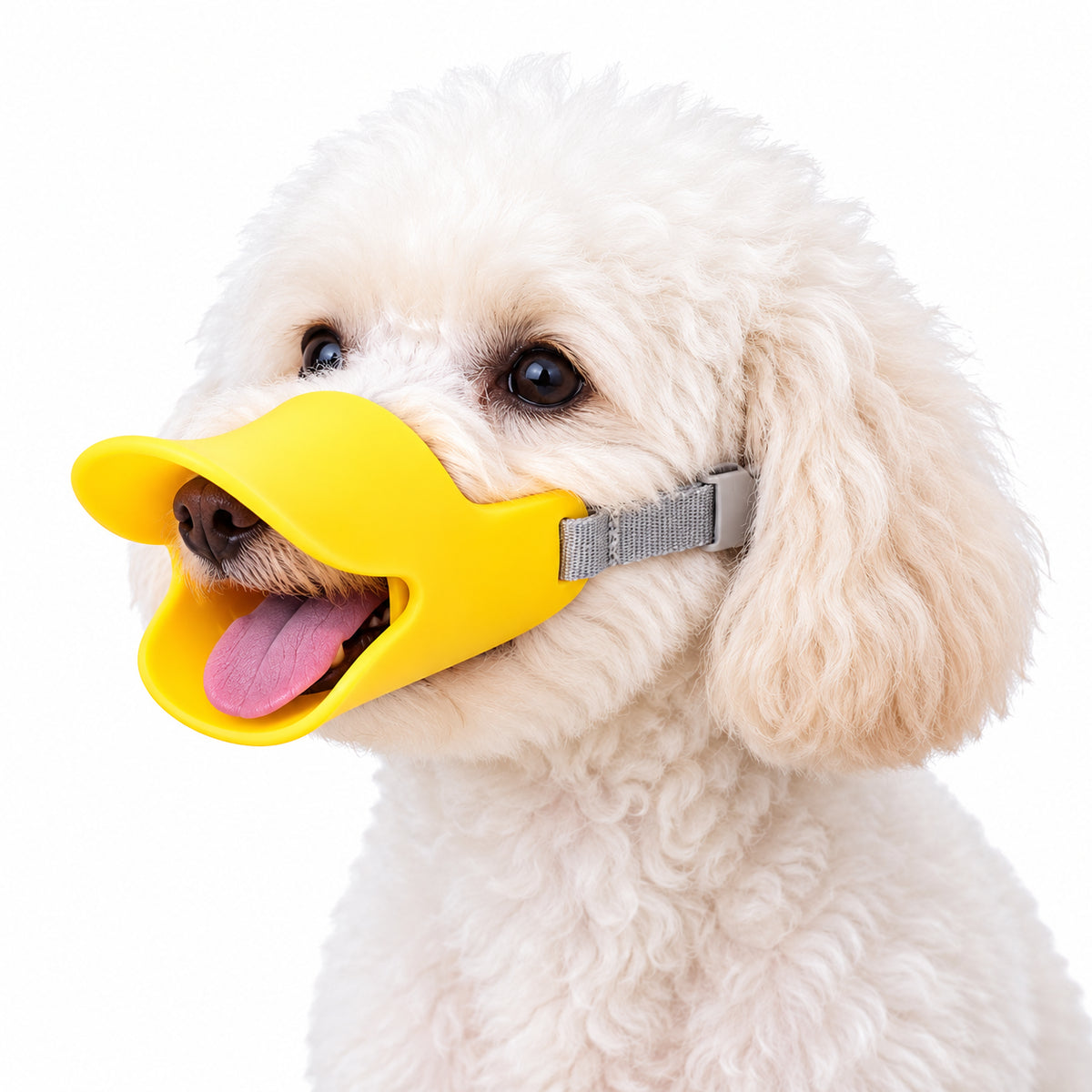
No, a muzzle is not cruel when it fits well, is introduced slowly, and is only worn for short periods under supervision. A well-fitted muzzle is a safety tool, not a punishment. It can protect your dog, other dogs, and the people around them during vet visits, grooming, or walks through busy places, while your dog still breathes, pants, and takes treats normally.
The problems people associate with muzzles almost always come from the wrong fit or the wrong use: a muzzle that is too tight, worn for hours, or put on a dog that has never been trained to accept it. Get the fit and the introduction right, and most small dogs accept a muzzle calmly within a week.
When a muzzle actually helps
A muzzle makes sense in a few everyday situations. At the vet, even a gentle dog may snap when it is scared or in pain, and a muzzle lets the vet work safely. During grooming, it can protect the groomer while nails are trimmed or mats are worked out. On walks, it can stop a small dog from picking up dropped food, rubbish, or other things it should not eat. It can also give you confidence around other dogs while you work on training.
A muzzle does not fix behaviour on its own. It is a management tool that buys you safety while training does the real work. If your dog is fearful or reactive, talk to your vet or a qualified trainer about a plan alongside the muzzle.
What a good muzzle looks like
Start with the material. Flexible silicone is a good choice for small dogs because it is soft against the face, light to wear, and easy to wipe clean after use. A rigid muzzle can rub and press, especially on a small snout.
Next, check the fit. The muzzle should sit comfortably over the snout without squeezing it, and the strap should hold it in place without pulling on the ears. Your dog must be able to open its mouth enough to pant and take small treats. If the muzzle presses on the nose or stops your dog from panting, it is the wrong size.
Finally, look for an adjustable strap. Small dogs vary a lot in head shape, so a strap you can tighten or loosen makes a real difference to comfort.
How to measure for the right size
Do not choose by breed or body weight alone. Measure around your dog's snout at its widest point, then check the size guide. The OIKEIOS Duck-Bill Silicone Dog Muzzle comes in three sizes: S fits a muzzle circumference of about 14 cm (around 2 to 4.5 kg), M fits about 16 cm (around 4 to 7.5 kg), and L fits about 18 cm (around 8 to 10.5 kg). Measure first, then order, and check the strap fit once it arrives. If it rubs, compresses the nose, or interferes with breathing and panting, try another size.
Introducing the muzzle in a week
Never just strap a muzzle on and head out the door. A slow introduction is what turns it from something scary into something ordinary.
Day 1-2: Let your dog sniff the muzzle. Put a treat inside it so your dog pushes its nose in voluntarily, then take it away. Repeat a few times.
Day 3-4: Hold the muzzle on for a few seconds while feeding treats through it, then remove it. Keep sessions short and cheerful.
Day 5-6: Fasten the strap for a minute or two indoors, feeding treats and praising your dog, then take it off. Build up to five minutes.
Day 7: Try a short walk around the block with the muzzle on. Bring treats and keep it relaxed. If your dog paws at it constantly or freezes, go back a step for another day or two.
Short, positive sessions beat long ones. End each session before your dog gets frustrated, and always pair the muzzle with something good.
Mistakes to avoid
Never leave a muzzled dog unattended. Do not use a muzzle during exercise, in hot weather, or anywhere your dog cannot fully open its mouth to pant and cool down. Remove it straight away if your dog shows distress. And do not rely on a muzzle as a substitute for training, supervision, or veterinary advice. No muzzle is guaranteed to prevent biting, barking, or scavenging.
A simple, comfortable option for small dogs
If you are looking for a first muzzle for a small dog, the OIKEIOS Duck-Bill Silicone Dog Muzzle is a practical place to start. It is made from flexible silicone, has an adjustable head strap with a buckle, and comes in three sizes (S, M, L) in bright yellow, priced at $18.99. The duck-bill shape is easy to recognise, and the soft silicone sits gently on a small snout.
Frequently asked questions
Is a dog muzzle cruel?
No, not when it fits properly and is used correctly. A well-fitted muzzle worn for short periods under supervision does not hurt your dog. Cruelty comes from a tight fit, long wear, or forcing it on an untrained dog.
Can my dog pant and drink while wearing a muzzle?
Your dog should be able to pant and take treats in a correctly fitted muzzle. Always check that your dog can open its mouth enough to pant before heading out, and remove the muzzle for drinking.
How long can my dog wear a muzzle?
Keep it to short periods, such as a vet visit, a grooming session, or a walk. Never leave a muzzled dog alone, and never use a muzzle during exercise or in hot weather.
Will a muzzle stop my dog barking?
Not necessarily. A muzzle is not guaranteed to prevent barking, biting, or scavenging. It is a safety aid, not a training replacement. If barking is the problem, work on the cause with a trainer.