
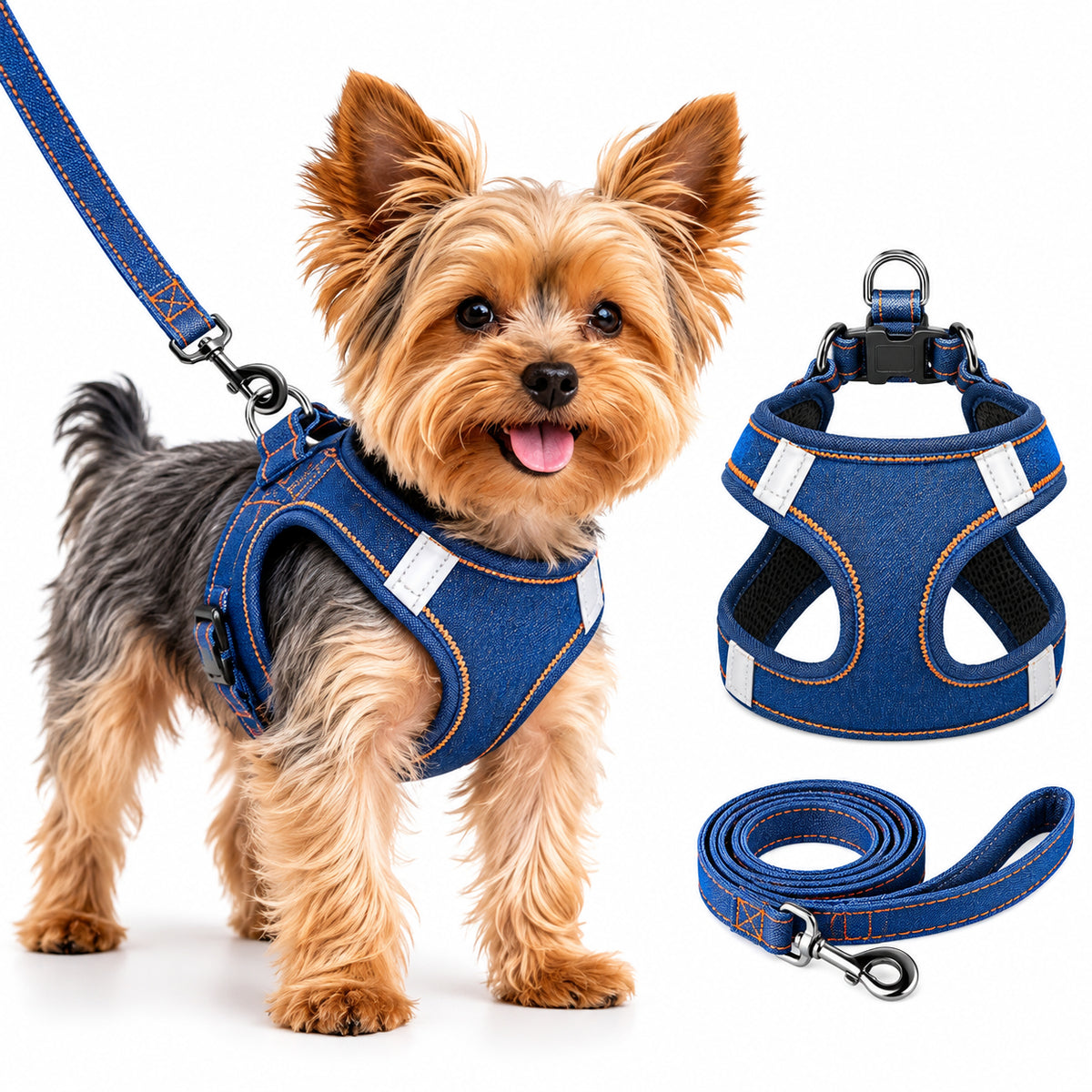
Short answer: Choose a vest-style harness that matches your small dog's chest measurement, adjusts at more than one point, and passes the two-finger test — snug enough that it cannot slip off, loose enough to fit two fingers flat between the harness and your dog's body. A well-fitted harness spreads pressure across the chest instead of pulling on the neck, which matters most for small dogs.
Small dogs are not just scaled-down big dogs. Their necks are more delicate, and a harness that is a little too big can slip off in a single backward step. Getting the fit right takes five minutes of measuring at home.
Measure Before You Buy
Grab a soft measuring tape and measure your dog while they are standing relaxed:
- Chest: Wrap the tape around the widest part of the chest, just behind the front legs. This is the number that matters most.
- Neck: Measure around the base of the neck, where a collar would sit.
- Weight: Weigh your dog if you can. Many size charts list weight ranges alongside chest measurements.
Compare your numbers with the size chart for the harness you are considering. If your dog falls between two sizes, choose the larger one — you can usually adjust a slightly big harness down, but you cannot stretch a small one.
The Two-Finger Fit Test
Once the harness is on, do this quick check before you head out:
- Slide two fingers flat under each strap. They should fit comfortably without forcing.
- If you cannot fit two fingers, loosen the straps. If you can fit three or four, tighten them.
- Check the front legs. The harness should sit clear of the armpits so it does not chafe while your dog walks.
- Ask your dog to walk a few steps indoors. Watch for any slipping, twisting, or rubbing.
Re-check after the first week — puppies grow fast.
Vest Style or Strap Style?
Vest harnesses wrap a wider panel around the chest. They spread pressure over a larger area, which many small dogs find more comfortable, and they are harder to slip out of. A vest style in a sturdy fabric like denim also holds its shape well on everyday walks.
Strap harnesses use narrow bands around the chest and belly. They are lighter and cooler in warm weather, but they need careful adjustment to stay in place on a small frame.
If your dog pulls, squirms, or has ever slipped a harness, a vest style is usually the safer starting point.
Don't Forget Visibility
Small dogs are easy to miss in low light, especially dark-coated ones. Reflective stitching or trim helps drivers and cyclists spot your dog at dusk or on early morning walks. Treat it as a must-have, not a nice extra.
Getting Your Dog Used to a New Harness
Some dogs accept a harness instantly. Others need a few days. Let your dog sniff it first, offer a treat as you fasten it, and start with five minutes of indoor wear before the first walk. If your dog freezes, take it off and try again later.
Common Mistakes to Avoid
- Buying by breed alone: Two dogs of the same breed can have very different chest sizes. Always measure.
- Leaving it on all day: A harness is for walks and outings. Take it off at home so your dog's skin can breathe and the straps do not rub.
- Skipping the re-check: Straps loosen with wear, and puppies grow. Check the fit every couple of weeks.
A Simple Option Worth a Look
If you want a vest-style harness that covers the basics — adjustable fit, reflective details, and sizes made for small dogs — the Denim Dog Harness for Small Dogs – Adjustable Reflective Vest from OIKEIOS is $27.99. It comes in dark blue denim with orange contrast stitching, and it is available in sizes XXS to L, so you can match it to your dog's actual chest measurement rather than guessing.
Whatever harness you choose: measure first, fit it with the two-finger test, and introduce it at home before the first real walk.
FAQ
Should a small dog wear a harness or a collar?
A harness is usually the better choice for small dogs, especially puppies and dogs that pull. It spreads pressure across the chest instead of the neck. A collar is still useful for holding ID tags.
How tight should a dog harness be?
Snug enough that it does not slide or twist, but loose enough to fit two fingers flat under each strap. If you can fit three or four fingers, tighten it. If you cannot fit two, loosen it.
Can my dog wear a harness all day?
It is best not to. Harnesses are made for walks and outings. Take it off at home so your dog stays comfortable and the straps do not rub the skin.
What size harness does my small dog need?
Measure the chest just behind the front legs and compare it with the size chart. If your dog is between sizes, pick the larger size and adjust it down. Sizes generally run from XXS for the tiniest dogs up to L for larger small breeds.