
If your cat disappears under the bed every time the doorbell rings, or spends most of the afternoon tucked inside a closet, you are not alone — and in most cases, you do not need to worry. Cats hide because hiding helps them feel safe: a small, enclosed space lets a cat rest undisturbed and step away from noise, visitors, or other pets. The simplest way to support this instinct is to give your cat a hiding spot of their own, such as a cozy cave-style bed in a quiet corner, so they do not have to squeeze behind the sofa or under the bed to feel secure.
Why Cats Hide
Hiding is one of the most normal things a cat can do, and it usually has a simple explanation. A new sound, a guest, a vacuum cleaner, or a change in the daily routine can send even a confident cat looking for cover. Kittens and newly adopted cats hide more often because everything is still unfamiliar. In a multi-pet home, a cat may also hide to take a break from a playful dog or a pushy housemate cat.
What matters is the pattern. A cat that hides for part of the day but comes out for meals, play, and affection is behaving normally. A cat that suddenly starts hiding all the time, stops eating, or avoids the litter box is telling you something has changed. If the change is sudden or comes with other changes in appetite, grooming, or energy, call your veterinarian for advice.
What Makes a Good Hiding Spot
A good hiding spot has four qualities: it is enclosed, it is warm, it is quiet, and it belongs to the cat. Enclosed matters most — cats feel safest when something is at their back and the entrance is small enough to watch. Warmth comes next, because cats love to curl up in a snug space that holds their body heat. And it should be the cat's own space, somewhere no one reaches in to pull them out.
That is why a cave-style bed works so well. Unlike an open bed, a cave bed gives your cat walls on every side and one small entrance to keep an eye on the room. Look for a bed with a soft exterior, a removable cushion you can wash, and a size that fits your cat curled up — not stretched out. Measure your cat while they sleep in their usual curled-up position, then compare that with the bed's dimensions before you buy.
How to Introduce a Cave Bed
Do not be surprised if your cat ignores a new bed for a few days. Cats are cautious about new things, and a bed that smells like a warehouse is not inviting yet. Start by placing the bed where your cat already likes to hide or nap. Put a blanket or cushion your cat has already slept on inside it, so the bed carries a familiar scent. A treat placed just inside the entrance can help a curious cat take the first step in — but never push your cat inside or close them in.
Once your cat has claimed the bed, leave it alone. Resist the urge to move it around the house or wash it too often, because the familiar scent is part of what makes it feel safe. If you have more than one cat, consider one hiding spot per cat, plus one extra, so no cat has to compete for a safe place to rest.
Where to Place It
Place the bed in a quiet corner, away from the front door and away from food bowls and litter boxes — cats do not like to sleep next to their toilet. A spot with a view of the room works well, because cats like to watch while they rest. In winter, keep the bed away from cold drafts; in summer, avoid direct sun, which can turn an enclosed bed into an oven.
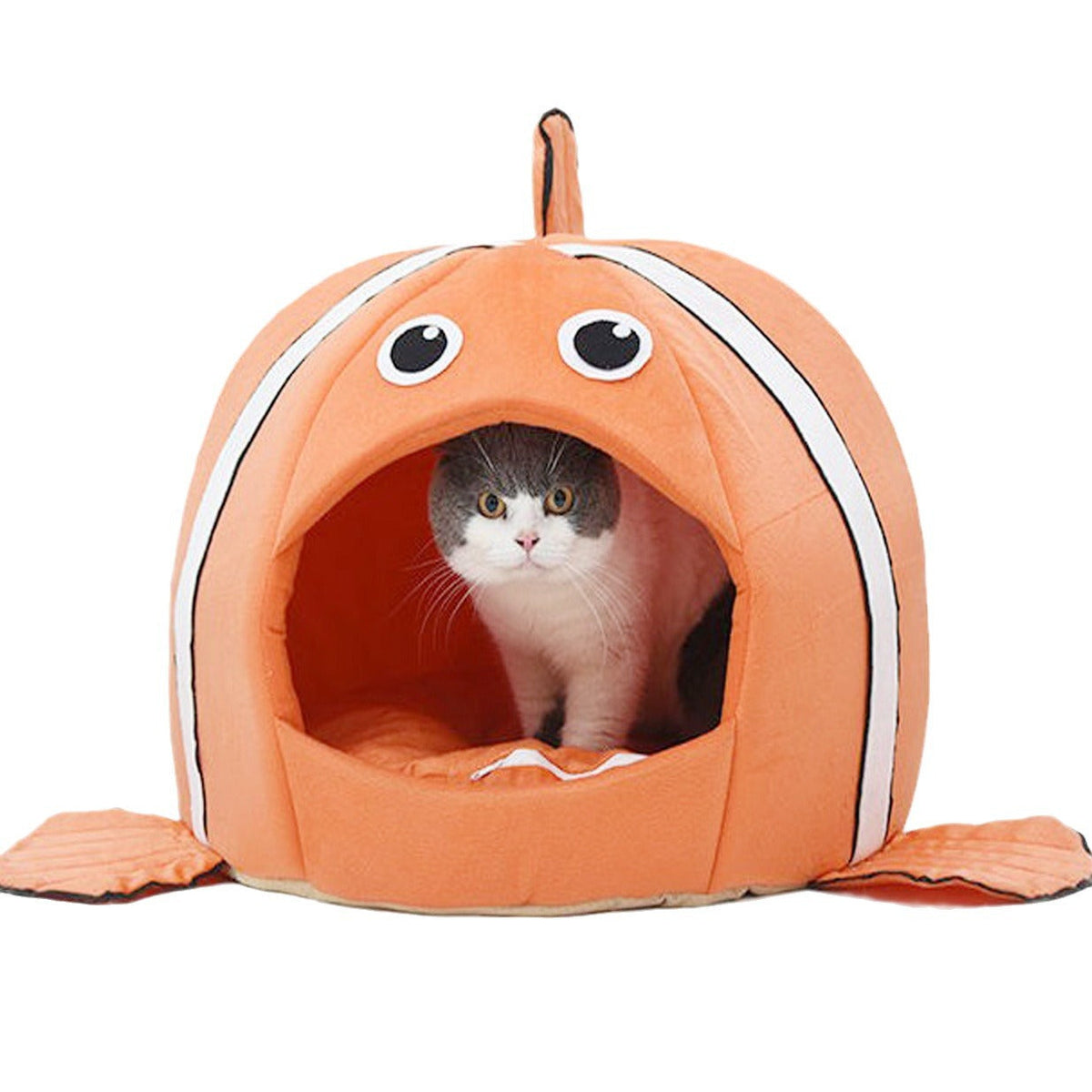
For a ready-made option, the Clownfish Cat Cave Bed from OIKEIOS gives your cat an enclosed, fish-shaped hideaway with a soft short-plush exterior and a separate round cushion. It comes in three sizes — S from $24.99, M at $29.99, and L at $36.99 — so you can match the bed to your cat's curled-up size.
Frequently Asked Questions
Is it normal for my cat to hide all day?
Yes, if your cat still comes out to eat, drink, use the litter box, and spend time with you. Cats sleep for much of the day, and many prefer to do it somewhere enclosed and quiet. It becomes a concern only when the hiding starts suddenly or comes with changes in eating, grooming, or energy — then a vet visit is the right next step.
What size cave bed should I buy?
Measure your cat while they sleep curled up, then choose a bed slightly larger than that curled-up size. A bed that is too big loses its cozy, den-like feel, while a bed that is too small will simply be ignored.
Should each cat have their own hiding spot?
Yes. In a multi-cat home, one hiding spot per cat plus one extra prevents competition and lets a shy cat rest without being disturbed. Even cats that get along well appreciate having a private place to retreat to.