
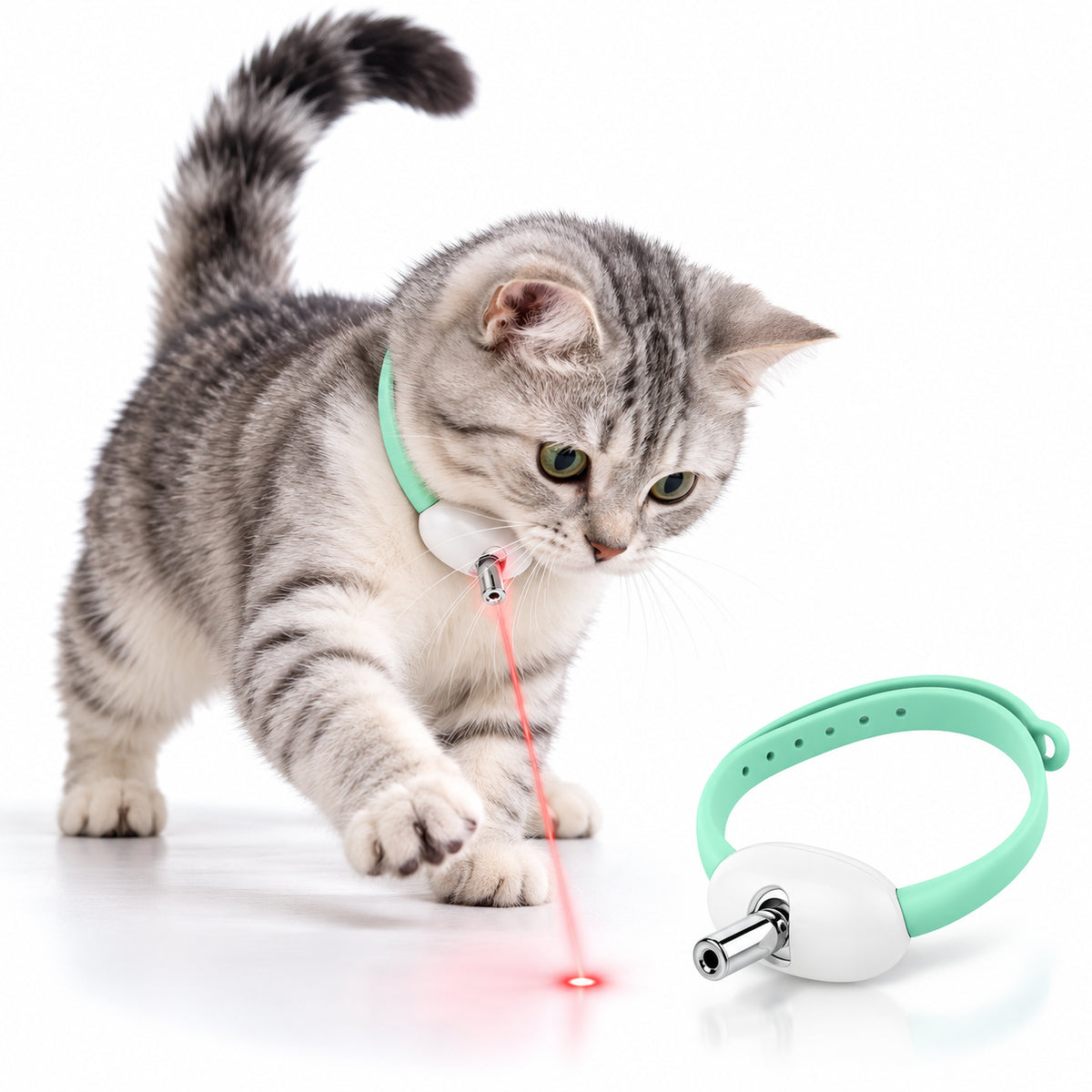
Yes — laser toys can be good for cats, as long as you play with them the right way. A moving dot of light taps into a cat's natural hunting instinct: stalk, chase, pounce. Used in short, supervised sessions and finished with something your cat can actually catch, laser play is a simple way to get an indoor cat moving. Here is how to play it right.
Why Cats Love Chasing a Laser Dot
Cats are hunters by nature, and a small moving light looks a lot like prey. It darts, stops, changes direction — exactly the kind of movement that triggers the stalk-and-chase sequence. For indoor cats, that burst of activity matters: a few minutes of chasing burns off energy and breaks up a long day of sleeping on the sofa, and it works in a hallway or a living room, no big yard needed.
The One Mistake to Avoid: Never Let the Game End With Nothing
The biggest drawback of laser play is that there is nothing to catch. A cat that chases a dot for ten minutes and never gets the satisfaction of a pounce can end the game frustrated, and some cats start searching the floor obsessively afterward. The fix is simple: always end the session with a real reward. Guide the dot onto a physical toy or a treat, then switch the laser off and let your cat pounce on the toy and "win." That closing moment turns the whole game into a complete hunt — stalk, chase, catch — instead of a chase that goes nowhere.
How to Play With a Laser Toy Safely
A few ground rules keep laser play safe and enjoyable:
- Never aim the beam at eyes. Do not point the laser at your cat's eyes, another pet's eyes, or anyone's eyes. Keep the dot on the floor or on a wall low down, and move it away from faces.
- Supervise every session. Laser play is an interactive game, not a toy to leave running on its own. Stay in the room, watch how your cat reacts, and stop if your cat seems stressed or overstimulated.
- Avoid reflective surfaces. Mirrors, glass doors, and shiny floors can bounce the beam in unexpected directions. Play on matte floors and rugs where you can see exactly where the dot is.
- Keep sessions short. Five to ten minutes is plenty for most cats. Watch for signs your cat has had enough — walking away, lying down, or losing interest — and end the game there.
- Do not use it as a walking or restraint collar. A laser collar is a play accessory. It is not a leash attachment and should not be used to hold or lead your cat.
A Hands-Free Option: the Laser Collar
Most laser toys are handheld, which means one of your hands is busy for the whole session. A laser collar changes that. The OIKEIOS Rechargeable Laser Cat Collar Toy ($26.99) sits on your cat's collar and projects the dot ahead of them, so the light moves as your cat moves. The adjustable strap fits neck circumferences from 20 to 31 cm, the laser head can be angled up to 41 degrees, and two light modes — steady and flashing — let you change the pace of the game. It charges by USB in about one hour, and the box includes the collar and a charging cable.
Because the light follows your cat rather than your hand, a collar toy works well when you want to play while doing something else nearby. The same safety rules still apply: supervise the session, keep the beam off eyes and reflective surfaces, and finish with a toy or treat your cat can catch.
A Simple 10-Minute Laser Play Routine
Try this routine once or twice a day:
- Warm up (2 minutes). Move the dot slowly along the floor in short bursts so your cat can stalk it.
- The chase (5 minutes). Speed up, change direction, and let the dot dart behind furniture legs or around corners.
- Slow down (2 minutes). Bring the dot back to a slow crawl so your cat can close in.
- The catch. Guide the dot onto a physical toy or a treat, switch the laser off, and let your cat enjoy the win.
Pair laser play with other kinds of play across the week — wand toys, crinkle balls, and puzzle feeders — so your cat gets variety and a real object to catch in every game.
Frequently Asked Questions
Is laser play safe for cats?
Yes, when you follow the basics: never aim the beam at eyes, supervise every session, avoid reflective surfaces, and keep sessions short.
How long should a laser play session last?
Five to ten minutes is enough for most cats. Stop sooner if your cat walks away or loses interest, and always end with a toy or treat your cat can catch.
Can kittens play with laser toys?
Short, gentle sessions can work for kittens, but keep the dot slow and close to the ground, supervise closely, and end with a physical toy. Very young kittens tire quickly, so a few minutes is plenty.
Does a laser toy replace other cat toys?
No. Laser play is best as one part of a varied play routine. Cats also need toys they can grab, bite, and carry, so mix laser sessions with wand toys, balls, and scratchers.