
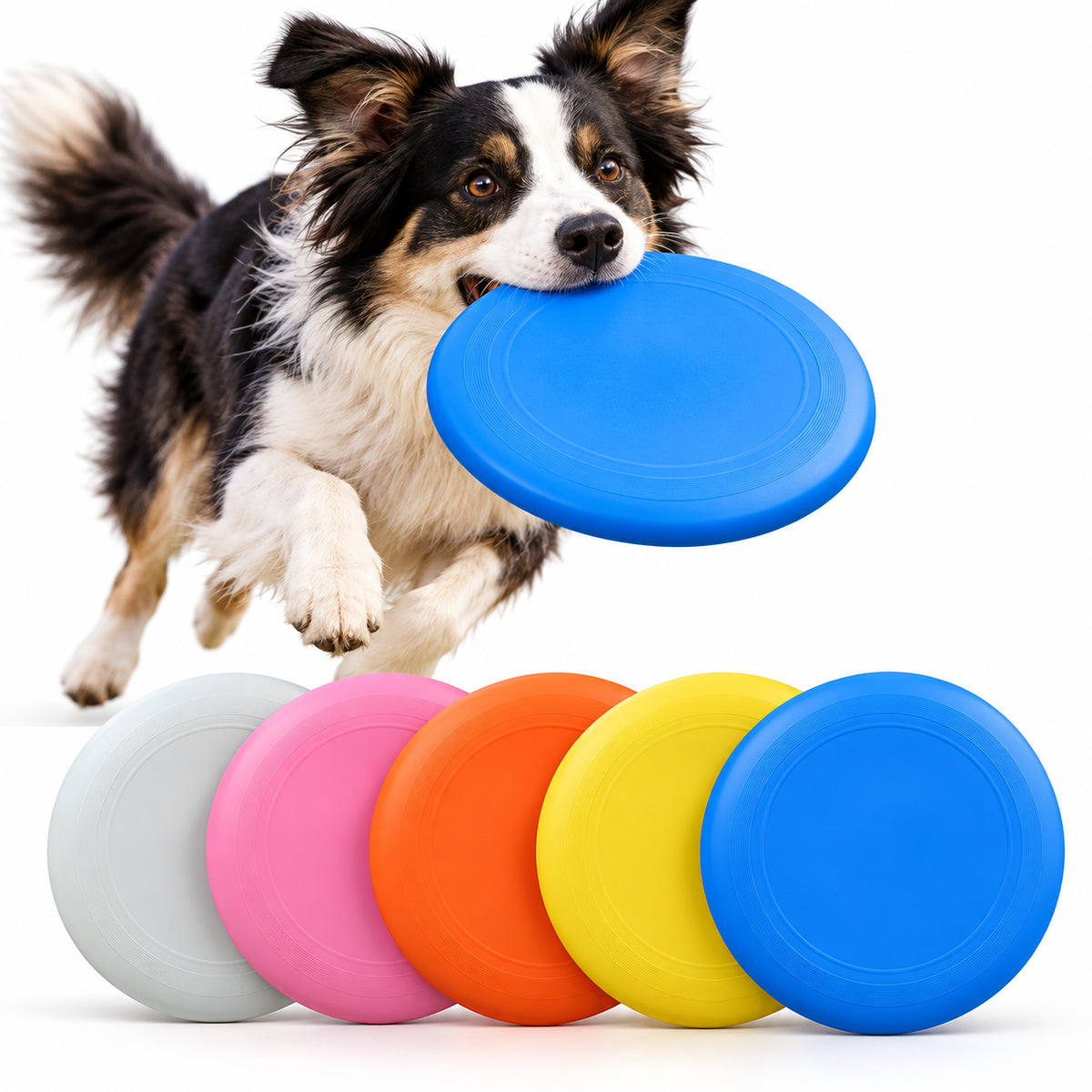
Yes, most dogs can learn to play fetch with a flying disc — if you teach it in small steps. Start with short, low tosses in a calm space, reward your dog for chasing, picking up, and bringing the disc back, and only add distance once each step feels easy. Most dogs do not need a perfect throw to have fun; they need a game that stays winnable.
Start where your dog already wins
Skip the big open field at first. Choose a quiet garden or park corner, keep the disc low, and roll it along the ground or toss it just a few feet. Reward the chase with a cheerful voice, a treat, or another round of play.
If your dog runs off with the disc, do not chase him — that turns fetch into keep-away. Instead, turn away and crouch down. Many dogs will trot over to investigate, and when the disc comes toward you, reward generously. Bringing it back should restart the fun.
Teach chase, pick-up, and return separately
Disc fetch looks like one game, but for your dog it is three jobs in a row. Breaking it down helps, especially for puppies and new retrievers.
First, reward the chase, even if your dog only trots after the disc and sniffs it. Second, reward the pick-up; a flat disc slides on grass, so some dogs need a few tries for a good grip. Third, reward the return, and throw again right away so returning never feels like the end of the game.
Keep sessions to five to ten minutes, and stop while your dog still wants more. A tired dog may chew the disc or wander off — a sign the session ran too long, not disobedience.
Throw for your dog, not for the crowd
A good throw is flat, gentle, and low. Hold the disc level, give it a smooth flick, and aim slightly ahead of your dog, not over his head. A high throw forces leaping and twisting; a low, floating throw gives him time to track and catch it safely.
Wind matters too. On a breezy day, throw with the wind at your back and shorten your throws. If the disc keeps curving away, move to a sheltered spot and let your dog win again.
Mistakes that slow the game down
The most common mistake is adding distance too fast: ten feet yesterday does not mean twenty feet today. Another is throwing again before your dog has finished with the first disc — wait, let him reset. Finally, do not let the disc become a chew toy. Discs are for supervised fetch, not unsupervised chewing. After play, wipe or rinse it clean, store it dry, and retire it if damaged.
A lightweight disc that suits beginners
For dogs just learning the game, a light, easy-to-carry disc helps a lot, because it is simpler to throw gently and easier for a dog to pick up. The OIKEIOS Flexible Dog Flying Disc for Fetch & Outdoor Play is $15.99, measures 20 cm (7.9 in) across, weighs about 60 g, and comes in five colors — Yellow, Pink, Orange, Sky Blue, and White. A bright color can also make it easier to spot on grass during park sessions, backyard play, and walks.
FAQ
How long does it take a dog to learn disc fetch?
It varies. Some dogs learn in a few short sessions; others need a week or two. If one day feels worse, shorten the throws and rebuild confidence.
What if my dog chases the disc but will not bring it back?
Make returning pay better than running off. Trade for a treat at first, step away to invite your dog back, and throw again right after a return. Do not chase your dog, which rewards keeping the disc.
Is disc fetch safe for puppies?
Keep it gentle for puppies: short distances, low throws, soft ground, and short sessions. Avoid high jumps, and stop before your puppy gets tired. Ask your veterinarian if you are unsure about exercise limits.
Can I use a flying disc every day?
Yes, in moderation. A few short sessions each week beat one long, exhausting session. Stop when you see heavy panting or fading interest.
Disc fetch does not have to look impressive to be wonderful. A low throw, a happy chase, and a disc brought proudly back to your feet — that is the whole game, and for most dogs, it is more than enough.