
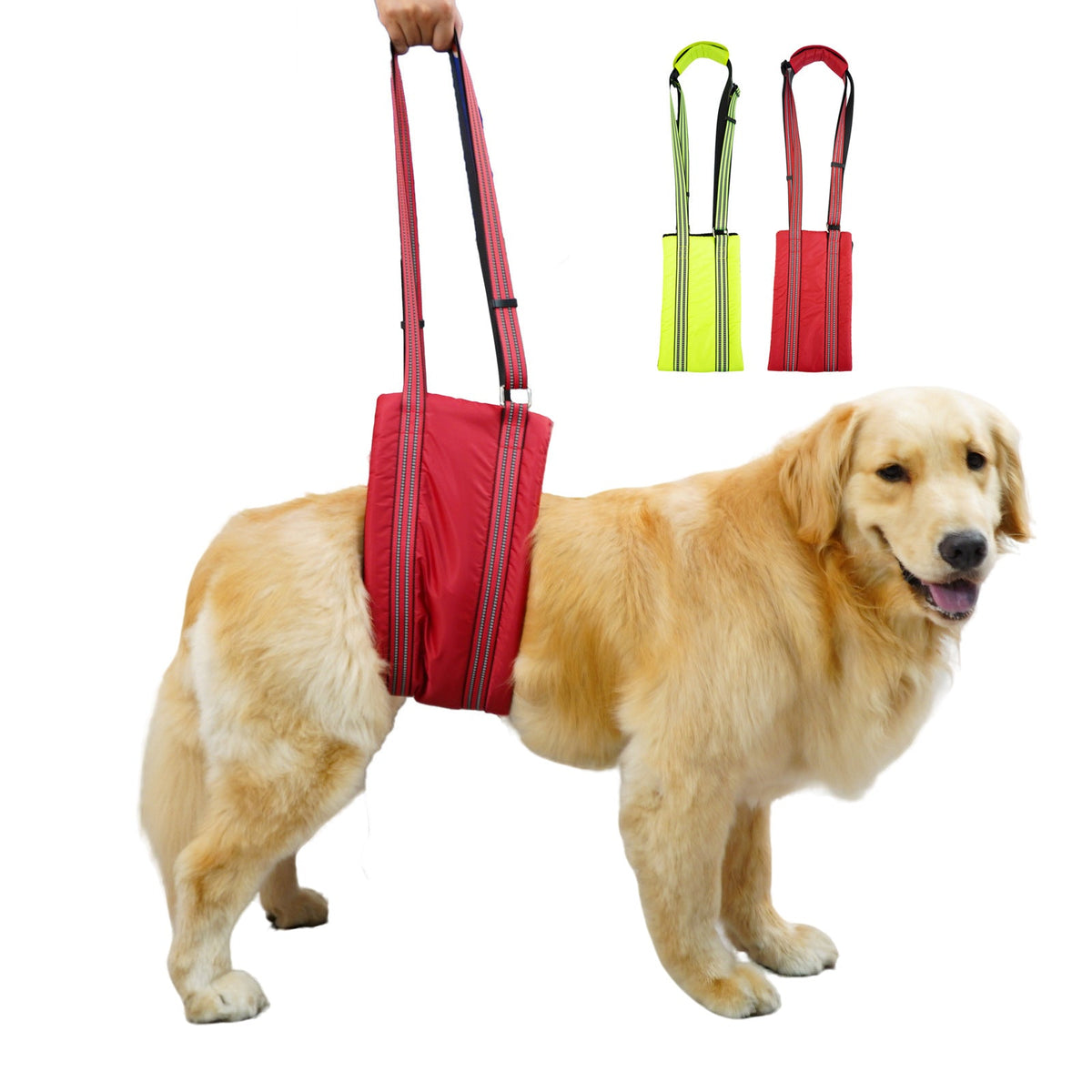
Yes — you can help a senior dog stand up more easily, and the simplest way is to support their back legs while they find their footing. A rear support lift harness lets you lift gently from under the belly and hips, so your dog can rise, walk a few steps, and settle down again without you hauling them up by the collar or their front legs.
Many older dogs are not in pain when they struggle to stand; their back legs have simply grown weaker, or the floor is too slippery for tired paws. A little help at the right moment can keep a dog moving, confident, and part of daily life for longer.
Why Senior Dogs Struggle to Stand
Aging changes a dog's body in small, steady ways. The muscles along the back legs lose strength, joints stiffen after rest, and the nerves that tell the legs where they are can slow down. Add a smooth kitchen floor or a soft bed that sinks under their weight, and standing up becomes a small project every single time.
Watch for the early signs: your dog rocks back and forth before rising, their back feet slide out on hard floors, or they hesitate at the bottom of the stairs. These are hints to change the setup, not reasons to panic — but do mention them at your dog's next vet visit, because a vet can rule out anything that needs real treatment.
Make the Floor Work for Them
Before buying anything, fix the ground under their feet. Runners and rugs on the routes your dog uses most — bed to water bowl, door to garden — give paws something to grip. A non-slip mat beside the bed and a ramp or a sturdy step up to the sofa remove two of the hardest moves of the day.
Keep nails trimmed and the fur between the paw pads short. Long nails and slippery pad fur turn every step into a slide, and a five-minute trim can make a visible difference the same afternoon.
How a Rear Support Harness Helps
A rear support harness is a padded sling that sits under your dog's belly and around the hips, with handles or straps you hold. Instead of pulling your dog up, you take some of their weight while they push with the legs they still have. It is a support accessory, not a treatment — it helps you assist, it does not fix the underlying cause.
Use it for the hard moments: getting up after a nap, stepping over a threshold, climbing the two steps to the garden, or walking to the car. Short, calm, supported walks are better than one long struggle. Let your dog set the pace, and put the harness on only when you are there to supervise.
The Dog Rear Support Lift Harness from OIKEIOS is one option, starting at $29.99. It has an adjustable lifting strap and a padded belly panel, comes in red or fluorescent green, and in size S the support panel measures 40 by 12 cm for dogs with a waist up to 50 cm. Measure your dog's waist before ordering and compare it with the size chart — a harness that fits well spreads the lift evenly instead of digging in.
A Simple Daily Routine
Keep help predictable and your dog will trust it. Try this short routine, morning and evening:
- Warm-up: Let your dog stretch and stand on a rug or mat, not a bare floor.
- Short walks: Several short, flat walks beat one long one. Five to ten minutes, then rest.
- Gentle support: Use the harness for the rise, the steps, and the turn — then let them walk on their own when they can.
- Rest spots: Put a firm, supportive bed in the room where the family gathers, so resting does not mean being left alone.
- Watch and note: If getting up suddenly gets harder, or your dog cries out, stops eating, or will not walk at all, call the vet rather than pushing through.
What to Avoid
Never lift or suspend a dog solely by a harness without appropriate guidance, and never drag a dog up by the collar or front legs. Avoid stairs when you can, skip high jumps onto beds and into cars, and do not use a harness as a substitute for veterinary care. If your dog's mobility changes quickly, that is a vet visit, not a shopping decision.
FAQ
How do I help my senior dog stand up?
Give their back legs a little lift at the moment they rise. Slide a padded rear support harness under the belly and hips, take some of their weight with the straps, and let them push up with their own legs on a non-slip surface.
Is a rear support harness safe for older dogs?
Used as directed and with supervision, yes — it is a support accessory for assisted movement. Choose the right size, keep sessions short, and check the skin under the panel for rubbing. Ask your vet if your dog has a recent injury or surgery.
Can my dog wear the harness all day?
No. Put it on for the moments your dog needs help — getting up, stairs, or a short walk — and take it off to rest. All-day wear can rub the skin and make your dog uncomfortable.
How do I pick the right size?
Measure your dog's waist and compare it with the product's size chart. For example, size S of the OIKEIOS rear support harness fits a waist up to 50 cm, with a 40 by 12 cm belly panel. When in doubt between sizes, check the chart rather than guessing.