
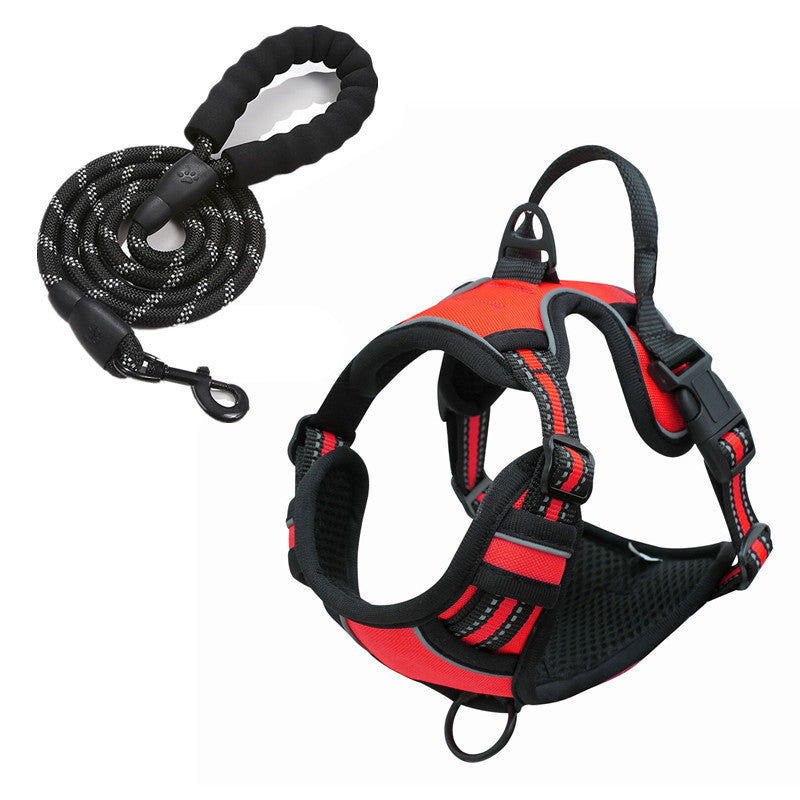
To measure your dog for a harness, wrap a flexible measuring tape around the base of the neck and around the widest part of the chest, just behind the front legs. Compare both numbers to the size chart and choose the size where both measurements fall inside the range. Never pick a size by breed or weight alone. A correctly fitted harness sits snug against the body, lets you slide two fingers under any strap, and does not twist, slip, or rub during a walk.
Most harness problems are really measuring problems. A harness one size too big lets a nervous dog back out of it at the worst possible moment, while one size too small rubs the skin under the front legs. Ten minutes with a tape measure prevents both.
Why Breed and Weight Are Not Enough
Two dogs of the same breed and weight can have very different chest shapes, and each shape needs a different fit. Puppies complicate it further, since a size that fits today may be tight in three weeks. That is why the size chart — not the breed label — should decide your purchase.
How to Measure Your Dog in Three Steps
You need a flexible fabric measuring tape and a calm minute with your dog. If you only have a rigid ruler, use a piece of string, mark the length, and measure the string against the ruler.
- Measure the neck. Wrap the tape around the base of the neck, where a collar normally sits. Keep it level and snug, but not tight.
- Measure the chest. Wrap the tape around the widest part of the chest, just behind the front legs. This is the number that matters most, because the chest strap carries most of the pull. Make sure the tape is level and your dog is standing, not sitting or lying down.
- Compare both numbers to the size chart. Find the size where both measurements fall inside the stated range. If they point to different sizes, choose the larger one and use the adjustable straps to take up the slack.
Measure twice — dogs shift and tapes slip. If your dog's measurements sit on the edge of a size range, go up a size. A harness can be adjusted smaller, but it cannot be stretched bigger.
The Two-Finger Test
Once the harness is on, slide two fingers flat under each strap. If they fit comfortably, the fit is about right. If you cannot get two fingers in, it is too tight. If you can fit three or four fingers, or the harness shifts when your dog turns, it is too loose. Check again after a short walk, because straps settle once your dog starts moving.
Signs the Fit Is Wrong
Your dog will usually tell you before you notice. Watch for rubbing or hair loss under the front legs, a harness that rotates to one side when your dog pulls, or a dog that can back out of the harness — that last one is serious, so stop using that size and re-measure right away. Reluctance to walk or constant pawing can also mean discomfort rather than stubbornness. Before deciding the size is wrong, check whether a strap has twisted — a twisted strap concentrates pressure and feels much worse than a correctly adjusted one. Flatten every strap, tighten evenly on both sides, and walk again.
Adjusting the Straps
Most modern harnesses adjust at the neck and the chest, often with quick-release buckles. Adjust both sides evenly so the harness sits centered on the chest. Tighten a little, let your dog walk a few steps, and tighten again if needed. Check the fit every couple of weeks for growing puppies, and after any big change in weight or coat thickness.
Do Not Forget Visibility
A good fit keeps your dog secure. Good visibility keeps them seen. If you walk at dawn, at dusk, or after dark, reflective detailing on the straps helps drivers and cyclists spot your dog from further away. It is a useful extra layer of safety, but it does not replace a light or staying aware of traffic. The OIKEIOS Reflective Adjustable Dog Harness & Leash Set ($24.99) pairs reflective strap detailing with breathable mesh lining and adjustable quick-release buckles, and comes in 9 colors and 4 sizes from S to XL, so you can match the set to the measurements you just took.
Frequently Asked Questions
Should I measure my dog standing up?
Yes. Standing squarely on all four paws gives the truest chest measurement. Sitting or lying down changes the shape of the chest and can add enough to push you into the wrong size.
What if my dog is between two sizes?
Choose the larger size and adjust the straps down. A harness that is slightly large can be tightened to fit; a harness that is slightly small cannot be made bigger, and it will rub.
How often should I re-check the fit?
Check it every two weeks for puppies, and after seasonal coat changes or weight changes for adult dogs. A quick two-finger test before a walk takes five seconds.
Is a harness better than a collar for walks?
For many dogs, yes. A harness spreads pressure across the chest instead of concentrating it on the neck, which is kinder for dogs that pull, for small breeds, and for dogs with breathing or neck issues.