
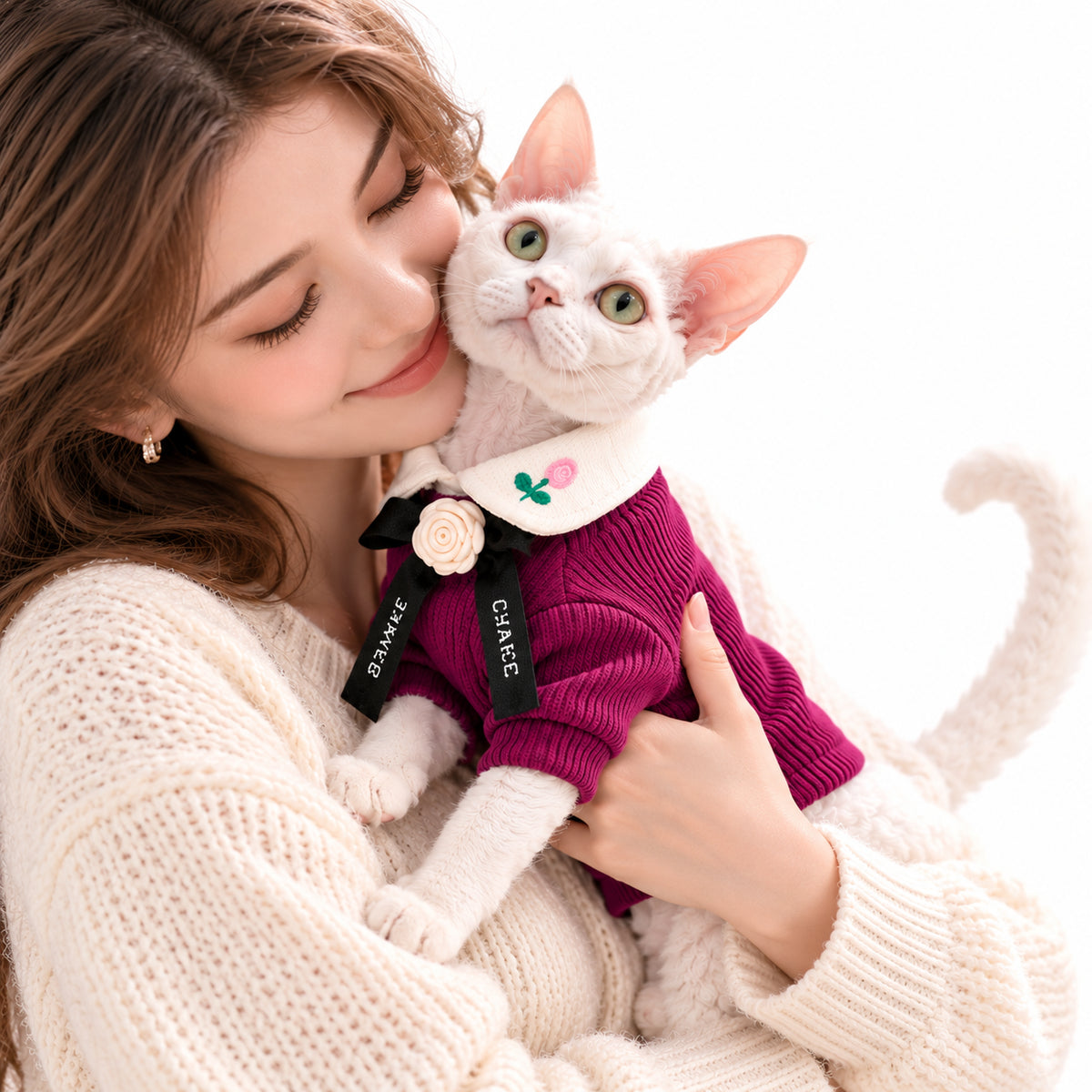
Yes — some cats genuinely benefit from a sweater in winter, especially older cats, short-haired breeds, and cats living in drafty homes. Most healthy adult cats with a full coat do fine indoors, but if your cat seeks out warm spots, curls into a tight ball, or shivers after a nap, a light, well-fitted sweater can add real comfort. The key is choosing a design that warms the upper body without restricting how your cat walks, stretches, or jumps.
How to Tell If Your Cat Is Cold
Cats rarely complain, but they do show it. Watch for your cat curling into a tight ball with the tail wrapped over the nose, spending hours pressed against a radiator or tucked under a blanket, or moving more slowly than usual on cold mornings. Cold ears and paws are another clue, as is a cat that suddenly wants to sleep on your lap every time you sit down. Short-haired breeds, kittens, senior cats, and cats that have recently been ill feel the cold first, because they have less natural insulation or a harder time regulating body temperature.
If your home stays above about 20°C (68°F) and your cat seems relaxed and active, a sweater is probably unnecessary. If the house cools down at night or your cat shows several of the signs above, an extra layer is worth trying.
What Makes a Cat Sweater Actually Work
A good cat sweater is not just a smaller dog sweater. Cats move differently: they crouch, stretch, climb, and squeeze through gaps, so a garment that covers the whole body often gets in the way. Look for these features:
- A front-leg design. A sweater that covers the upper body and front legs while leaving the hind legs and hindquarters free lets your cat walk, jump, and use the litter box normally.
- A soft, flexible knit. Ribbed fabric stretches with the body instead of pulling, which matters when your cat curls up or stretches out.
- No dangling parts. Avoid loose buttons, long ties, or hanging trim that a cat can chew or catch on furniture.
- The right fit. Measure your cat before ordering. Use back length and chest girth as the main fit references rather than weight alone, and if your cat falls between sizes, size up for comfort.
Getting the Fit Right
Measure your cat while they are standing relaxed. Back length runs from the base of the neck to the base of the tail, and chest girth is measured around the widest part of the chest, just behind the front legs. For reference, the OIKEIOS Plum Ribbed Cat Sweater comes in five sizes: XS fits a back length of 18 cm and a chest of 24 cm, S fits 22 cm and 29 cm, M fits 26 cm and 34 cm, L fits 30 cm and 39 cm, and XL fits 34 cm and 44 cm. A sweater should sit flat without gaping at the neck and without pulling tight across the chest. You should be able to slip two fingers between the fabric and your cat's body.
How to Introduce a Sweater to Your Cat
Most cats need a short adjustment period. Start by letting your cat sniff the sweater, then slip it on for just a few minutes during a calm moment, ideally before a meal or a play session so the experience ends on a good note. Watch how your cat moves: a little stiffness at first is normal, but if your cat freezes, flops over, or tries hard to escape, take it off and try again another day with a shorter session. Never leave a sweater on an unsupervised cat until you are confident it fits well and your cat moves freely in it. Check the fit before extended wear, and remove the garment if it restricts movement or causes rubbing. Wash it gently and let it dry completely before the next use.
A Simple Option for Cooler Days
If you want to try a sweater without guessing at the design, the Plum Ribbed Cat Sweater with Cream Collar is a practical starting point. Its front-leg design warms the upper body while the hind legs stay free, the soft ribbed knit suits cooler indoor days, and the cream collar gives it a dressed-up look. It comes in five sizes from XS to XL and costs $24.99. Pair it with a warm bed near a sunny window, and most cats settle into winter quite happily.
Frequently Asked Questions
Do indoor cats need sweaters in winter?
Not always. Healthy adult cats with a thick coat are usually comfortable indoors. Sweaters help most for short-haired breeds, kittens, senior cats, and cats in homes that get cold at night.
How long can my cat wear a sweater?
Start with short sessions of a few minutes and build up. Once your cat is comfortable, a few hours indoors is fine, but take the sweater off at night and check the skin underneath regularly for rubbing.
What if my cat hates wearing clothes?
Some cats never accept clothing, and that is fine. A warm bed, a blanket, and a draft-free sleeping spot give the same comfort without the stress. Never force a sweater on a cat that clearly dislikes it.
How do I wash a cat sweater?
Wash it gently by hand or on a gentle machine cycle, and let it air dry completely before reuse. Check the fit again after washing, since knits can change shape slightly.