
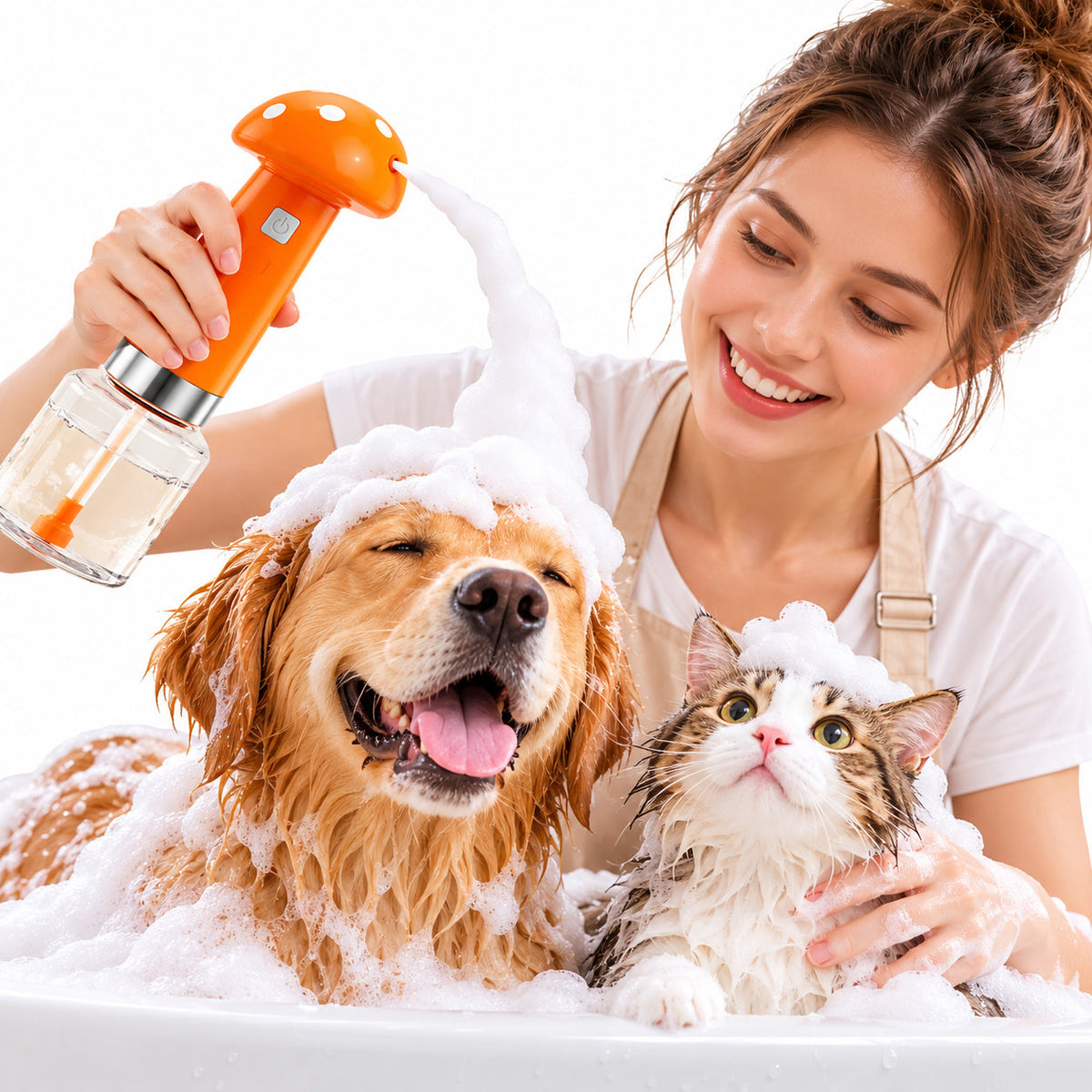
Yes — the easiest way to make bath time less stressful for your dog or cat is to turn the shampoo into a soft foam before it ever touches their fur. Foam spreads evenly with far less rubbing, rinses out faster, and means less time in the tub for everyone. A short, calm foam bath works for most dogs and cats, and it is much kinder to sensitive skin than scrubbing undiluted shampoo straight onto the coat.
Why foam makes bath time easier
Most bath-time struggles come from the same three problems: shampoo that is hard to spread, a pet that gets cold and slippery, and a wash that drags on too long. Foam solves the first one directly. Because it is already light and airy, a small amount of shampoo covers a large area, so you can work quickly and gently instead of rubbing the same spot over and over.
Foam also rinses out more easily than a thick layer of liquid shampoo. That matters because leftover shampoo is a common reason pets scratch or lick themselves after a bath.
A simple foam bath routine
Try this routine next time your dog or cat needs a wash. It should take about ten to fifteen minutes for a small or medium pet.
1. Brush first. A quick brush removes loose fur and tangles before water is involved. Wet tangles are much harder to work through, and brushing first helps the foam reach the skin.
2. Wet the coat with lukewarm water. Test the water on the inside of your wrist, the way you would for a baby. Wet the body first and leave the head until last.
3. Apply foam, not liquid shampoo. Make the foam first, then smooth it over the coat with your hands. Work from the neck down toward the tail, using small, slow circles. There is no need to scrub hard — the foam does the spreading for you.
4. Wash the face separately. Use a damp cloth with a little foam for the face, ears, and around the eyes. Never pour water or foam directly over your pet's head.
5. Rinse thoroughly. Rinse until the water runs clear and the coat no longer feels slippery.
6. Dry gently. Squeeze out excess water with your hands, then wrap your pet in a towel and pat dry. Keep them somewhere warm until they are fully dry.
Helping a nervous dog or cat
If your pet hates baths, do not try to fix it in a single session. Let them sniff the empty tub, the towel, and the foam maker while everything is dry and calm. Reward calm behaviour with a treat and a quiet word. On bath day, keep your voice low and move slowly, and keep one hand on your pet so they always know where you are.
Cats in particular often do better with a shallow wash. A few centimetres of lukewarm water in the bottom of the tub, plus foam applied by hand, is usually enough for a cat that only needs a light clean. If your cat becomes very stressed, stop and try again another day.
Common bath-time mistakes to avoid
Do not use human shampoo on your pet. Human skin and pet skin have different needs, so always use a shampoo made for dogs or cats, and follow the dilution guidance on its label. Do not pour shampoo straight onto a dry coat, and do not rush the rinse. Most healthy dogs and cats only need a bath when they are actually dirty or smelly — bathing more often than that can dry out their skin.
A handy way to get that ready-made foam is the Electric Pet Shampoo Foam Maker for Dogs & Cats ($27.99–$29.99). It is a handheld electric dispenser that turns your own pet shampoo into a soft foam, and it comes in two playful styles — Mushroom (orange or blue) and Deer (yellow or blue) — so bath time feels a little less like a chore and a little more like a routine you can both get through calmly.
Frequently asked questions
How often should I bathe my dog or cat? Most dogs need a bath only when they are dirty, muddy, or smelly — for many, that is every few weeks. Cats usually groom themselves and rarely need a full bath unless they get into something sticky or dirty. If you are unsure, ask your vet.
Can I use the same shampoo for my dog and my cat? Not always. Some dog shampoos contain ingredients that are not suitable for cats, so check the label and use a product made for the pet you are washing. A foam maker works with your own pet shampoo, so you can use the right one for each pet.
Why does my pet shake and run away after a bath? Shaking is normal — it is how pets dry themselves. Running away usually means they were cold, startled, or kept in the water too long. A shorter foam bath, lukewarm water, and a warm towel straight after usually helps.
Is foam better than liquid shampoo for pets with sensitive skin? Foam can be gentler because it spreads with less rubbing and rinses out more completely, which means less residue left on the skin. The shampoo itself still matters most, so choose a gentle, pet-safe formula and rinse well.