
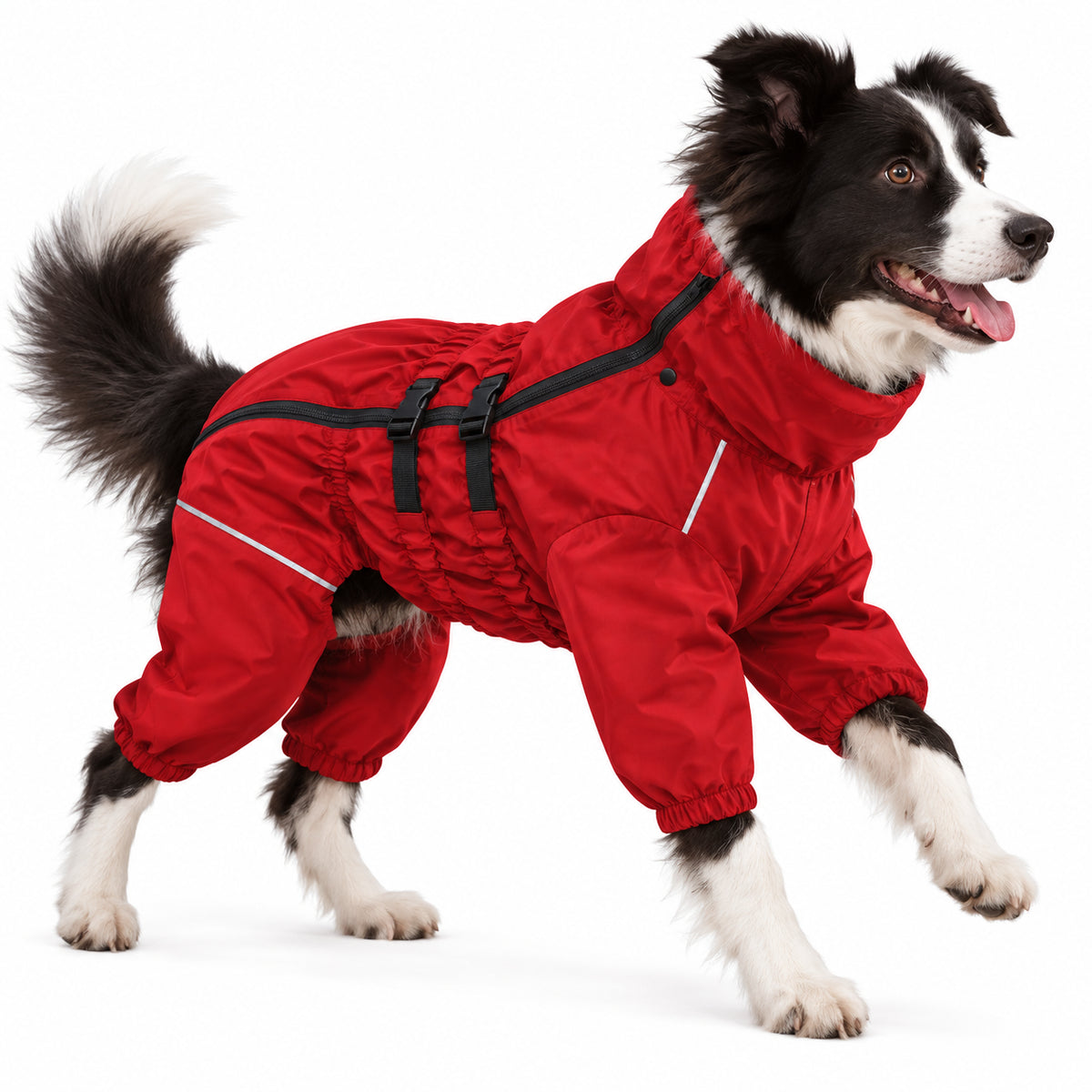
Short answer: keep rainy walks short, cover your dog with a well-fitting waterproof coat, and finish with a quick drying routine at the door. That combination keeps most of the rain off your dog, keeps mud out of your hallway, and still gives your dog the walk, the sniffing, and the bathroom break they need.
Rain does not have to cancel walk time. It just means preparing a little, choosing a shorter route, and drying your dog at the door.
Before You Leave: A Five-Minute Check
Start with the forecast, not just the sky outside your window. For steady rain, pick a shorter loop close to home so you can cut the walk short if the weather turns worse.
Next, check the coat. Put it on indoors, where your dog is calm, and check that they can walk, trot, and turn normally. It should cover the back and sides without pulling tight across the chest or legs, and it should not shift around when your dog moves. If it rubs or restricts movement, adjust it or try another size before you head out.
Finally, set up your landing zone by the door: an old towel or washable mat, a second dry towel for paws and belly, and a place to hang the coat to dry. Doing this before the walk means you are not scrambling with a wet dog in one hand and a muddy towel in the other.
Getting the Fit Right
Fit matters more than color, because a coat that does not fit will not stay in place in wind and rain. Measure your dog while they are standing relaxed, and compare that measurement with the size guide for the coat you are considering. Do not guess from breed alone: two dogs of the same breed can have very different body lengths and chest shapes.
For medium and large dogs, a jacket-style raincoat is often a practical choice because it gives real body coverage for everyday walks. The OIKEIOS Waterproof Dog Raincoat, for example, is made for outdoor walks in rainy and windy conditions, with a waterproof outer layer and jacket-style coverage. It comes in red, black, and fluorescent green, with sizes from 12 inches through 30 inches, starting at $39.99. A brighter color can also help your dog be easy to spot on grey days.
On the Walk: Shorter and Steadier
On a rainy day, a shorter route is usually the kinder choice. Let your dog sniff and do their business, keep moving at a steady pace, and skip a long run in a muddy field if the ground is waterlogged. Wet ground can hide holes, drains, and slippery patches, so a familiar path is often better than a new adventure in heavy rain.
Keep your dog on a leash near roads, where rain can reduce visibility for drivers and for you. Avoid deep puddles when you can: they can hide sharp objects or drains, and some dogs love to splash through them and then need a full clean-up at home. If the rain suddenly gets much heavier, or thunder starts, head home. A shorter walk that ends happily is better than a long walk that ends with a soaked, stressed dog.
After the Walk: A Two-Minute Drying Routine
As soon as you are home, take the coat off at the door and hang it to dry fully before you store it. Then towel-dry your dog, starting with the paws, then the legs and belly, and finally the back and ears. Pay extra attention to the paws, where mud and grit can collect between the toes.
Once your dog is dry, give them fresh water and a quiet place to settle.
Frequently Asked Questions
Does my dog really need a raincoat?
Not every dog needs one for a quick trip outside in light rain. A raincoat is most helpful for longer walks in steady rain, for dogs with longer coats that take a long time to dry, and for owners who want to cut down on mud and wet fur in the house.
How do I choose the right size?
Measure your dog standing up, and compare the result with the coat's size guide instead of guessing from breed or weight alone. The coat should cover the back without pulling tight, and your dog should be able to walk and turn freely. If it shifts or rubs, adjust the fit or try another size.
What if my dog does not like wearing a coat?
Introduce it slowly. Let your dog sniff it, put it on for a few minutes indoors with praise and a treat, and build up to short outdoor walks. If your dog freezes or keeps trying to get the coat off, stop, take it off, and try again another day with a shorter session.
How do I look after a dog raincoat?
Shake off loose dirt, follow the care instructions that come with the coat, and always let it dry fully before storage. Check it before each use for damage or worn fastenings, and remove it if it shifts or causes rubbing.
Rainy days do not have to mean skipped walks or a soggy house. With a coat that fits, a shorter route, and a simple drying routine at the door, you and your dog can keep enjoying your daily walk, whatever the weather does.