
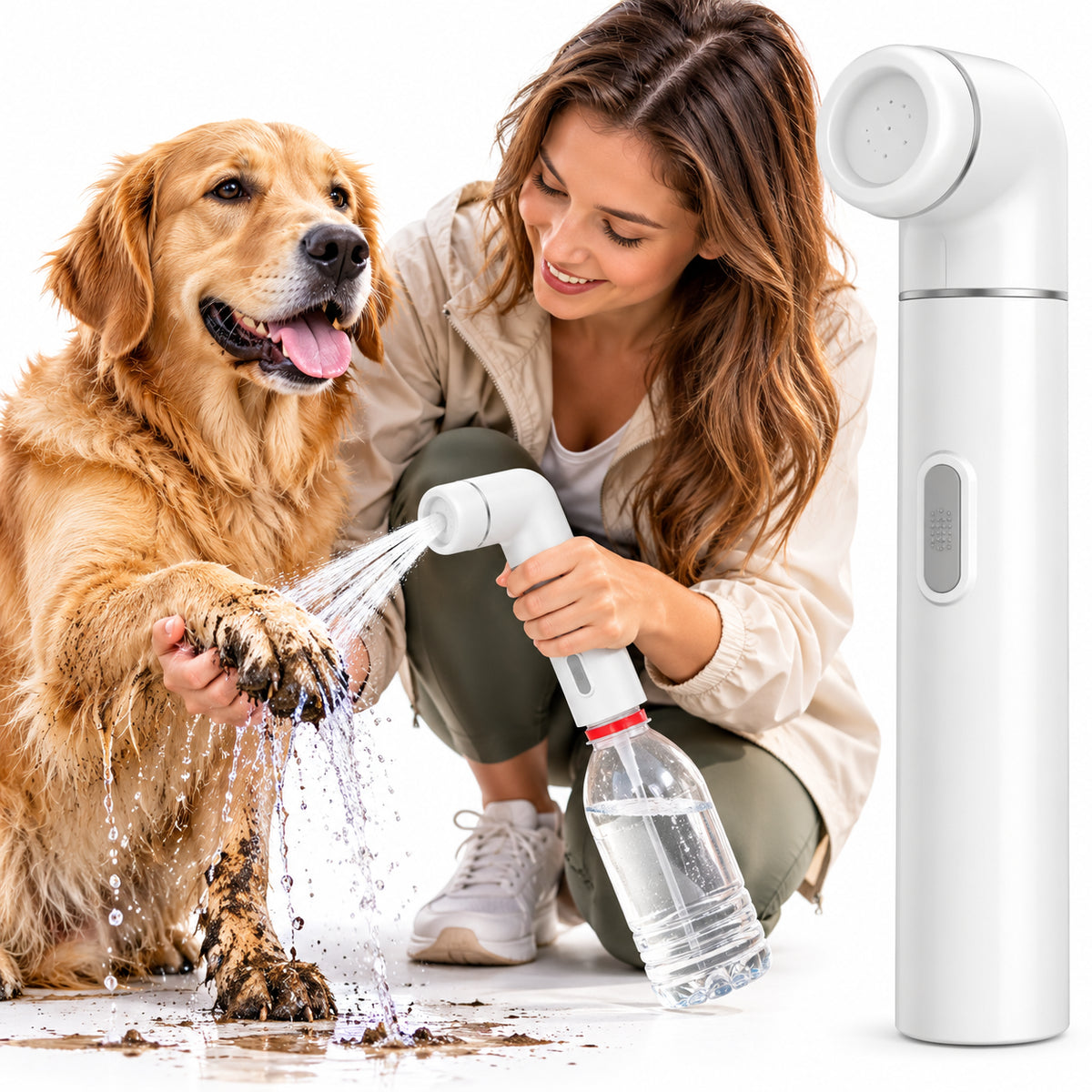
Short answer: you do not need a full bath. When your dog comes home with muddy paws, a quick rinse of just the paws with clean, lukewarm water — followed by a good towel dry and a quick check between the toes — is usually all it takes. It keeps the mud out of your house, keeps your dog comfortable, and saves a full bath for the days they really need one.
Our dog loves a rainy-day walk, and our hallway used to show it: paw prints on the floor and mud on the rug. Once we switched to a simple paw-rinse routine at the door, the whole thing got faster and calmer — for both of us.
Why muddy paws deserve a quick rinse
Mud is more than a housekeeping problem. Wet mud dries into grit between the toes, and that grit can rub and irritate the skin if it stays there all day. Dogs also pick up small stones, twigs, and road debris on walks, and in colder months there may be grit or de-icing residue on pavements. A quick rinse removes most of that before it causes soreness or ends up on your sofa, and it gives you a natural moment to spot a small cut or a burr early.
The 5-minute paw-rinse routine that works at our door
We keep a towel by the door, a rinse tool ready, and a few treats in a jar. Here is the routine:
- Start before the mud dries. Rinse paws right after the walk, while the mud is still soft. Dried mud takes longer and needs more rubbing.
- Use clean, lukewarm water. Rinse one paw at a time, letting the water run over the top of the paw and between the toes. Keep the flow gentle and aimed only at the paw.
- Check between the toes. Spread the toes gently and look for trapped mud, small stones, or tangled debris. Most of it rinses away with the water.
- Dry thoroughly. Pat each paw dry with a towel, including between the toes. Paws that stay damp can get sore, especially in cold or humid weather.
- Finish with a treat. A small reward after the last paw turns the routine into something your dog expects rather than dreads.
The whole thing takes about five minutes once it becomes habit — far less than a bath, and far less than cleaning mud off the floors afterwards.
What not to do
Do not use hot water, and skip harsh household soaps or detergents on paws — plain water is enough for everyday mud. Do not aim water at the ears, nose, or eyes, and do not scrub hard at sore or cracked skin. If you notice a cut, swelling, limping, or anything that looks infected, skip the home routine and talk to your veterinarian instead.
When a targeted rinse beats a full bath
Reach for the paw rinse when only the paws are dirty — after a muddy walk, a rainy garden visit, or a dusty trail. Save the full bath for when your dog has rolled in something, is dirty all over, or genuinely smells. Bathing too often can dry out a dog's skin and coat, so keeping baths for the times they are truly needed is kinder to your dog and easier on you.
A tool that makes the door routine easier
We used to juggle a jug of water and a wriggling dog, which is why a handheld rinse tool earned its place by our door. The OIKEIOS Portable Electric Pet Rinse Cleaner (starting at $39.99) is a small, portable electric rinser that gives a controlled, directed flow of water without repeated manual squeezing — handy when you need one hand free to hold a paw. At about 500 g, the standard unit is light enough for a travel kit too, and LED and bottle-set versions are available. It is designed for targeted rinsing of paws, the mouth area, and other sensitive areas — exactly the kind of quick cleanup this routine calls for.
Frequently asked questions
Can I just wipe muddy paws with a towel?
For dry, dusty paws, a good towel wipe is often enough. For wet mud, a rinse works better — wiping alone tends to smear mud around and leaves grit between the toes. Rinse first, then towel dry.
How often can I rinse my dog's paws?
As often as they get muddy. A plain-water rinse after muddy walks is a normal part of everyday care. The important part is drying well afterwards, so paws do not stay damp for hours.
Should I use soap every time?
Usually not. Plain water handles ordinary mud. If paws are very grimy, a small amount of a gentle, dog-safe wash used occasionally is fine — just rinse it off fully so no residue stays between the toes.
What if my dog hates having their paws touched?
Go slowly and keep sessions short. Start with one paw, lots of praise, and a treat, and build up over several days. Most dogs settle once they learn the routine is quick and ends with something tasty.
Muddy paws are a small, everyday part of life with a dog — and easy to handle once the routine is in place. Rinse at the door, dry well, and check between the toes.