
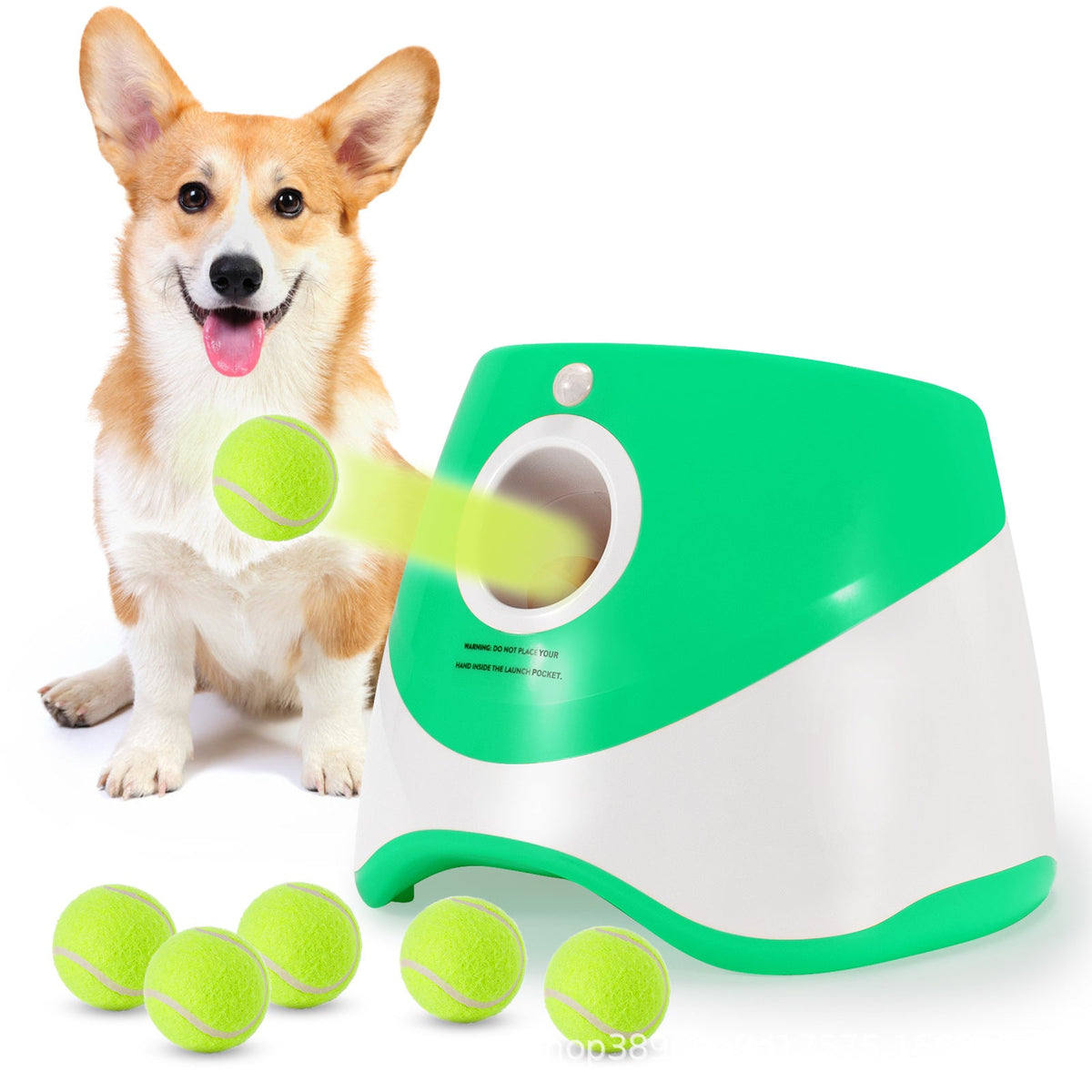
Short answer: Let a machine do the throwing. An automatic ball launcher keeps a game of fetch going long after your arm gets tired, and a 15 to 20 minute session of sprinting, chasing, and bringing the ball back is usually enough to leave most dogs happily worn out. The trick is to match the launch distance to your space, use the right size of ball, and build in short rest breaks.
Why fetch tires a dog out so fast
Fetch packs a lot of exercise into a small amount of time. Each throw asks your dog to sprint, brake, turn, pick up the ball, and run back to you. That mix of running and changing direction works more muscles than a steady walk, and the chase itself keeps a dog mentally engaged. A dog that would need an hour-long walk to feel satisfied can often get the same tired, content feeling from a focused fetch session in the yard.
The problem: your arm quits before your dog does
Most owners know the feeling. You throw the ball ten times, your shoulder starts to ache, and your dog is standing in front of you, ball in mouth, tail wagging, ready for throw number eleven. High-energy breeds in particular seem to have an endless supply of enthusiasm for fetch, while their owners run out of throwing power in a few minutes. The game ends early, the dog still has energy to burn, and that leftover energy often shows up later as restlessness, chewing, or barking at the window.
How an automatic ball launcher changes the game
An automatic launcher takes over the throwing so the game can keep going at a steady pace. The OIKEIOS Rechargeable Automatic Dog Ball Launcher, priced at $89.99 for the 3-ball set, offers three launch distances of about 3, 6, and 9 metres, so you can match the throw to the space you have. A small yard works well on the shortest setting, while a park or a large garden can use the longer ones. It runs on a rechargeable battery with about 2 to 3 hours of play per charge, and it charges over USB-C, so there are no disposable batteries to keep buying.
The routine is simple: your dog drops the ball into the top, the launcher fires it out, and your dog chases it down and brings it back. Many dogs learn the loop quickly, and once they do, the game almost runs itself while you supervise from a chair.
How to set up a fetch session that actually tires your dog out
- Pick the right distance. Start on the shortest setting and watch how your dog handles it. Move up to a longer distance only when you have clear, open space with no fences, roads, or flower beds in the landing zone.
- Warm up first. A few gentle throws or a short walk before the session helps your dog loosen up, just like a warm-up before a run.
- Play in intervals. Let your dog fetch for five minutes, then pause for water and a breather. Two or three rounds like this tire a dog out far more safely than one non-stop sprint.
- Keep the ball moving, not the dog guessing. A steady rhythm of throws keeps your dog focused and running. Long pauses between throws let excitement fade and make the game less satisfying.
- End on a high note. Stop while your dog is still enjoying the game, not after they are exhausted. A short rest, a drink of water, and a calm walk home round the session off well.
Fetch safety basics
- Always supervise. Automatic launchers are designed for supervised play. Keep hands away from the launch opening, and use the launcher in a safe, clear area.
- Use the right balls. This launcher takes 2-inch tennis balls. Standard larger tennis balls may not fit, and the wrong size can jam the mechanism.
- Check balls for wear. Replace balls that are cracked, frayed, or coming apart, and keep an eye out for loose fuzz that a dog could swallow.
- Mind the surface. Grass or soft ground is kinder on joints than concrete. Avoid slippery surfaces where a sprinting dog could slide.
- Watch for tiredness. Heavy panting, slowing down, or losing interest are signs to stop. Puppies, older dogs, and dogs with joint problems should play shorter, gentler sessions.
Frequently asked questions
How long should a fetch session last?
For most healthy adult dogs, 15 to 20 minutes of fetch with short water breaks is a good session. Start shorter for puppies and older dogs, and watch your dog rather than the clock.
Can my dog use an automatic ball launcher indoors?
It can work in a large, clear indoor space on the shortest distance setting, but fetch is best outdoors where your dog has room to sprint and stop safely.
What size balls does the launcher need?
The OIKEIOS launcher uses 2-inch tennis balls. The 3-ball set costs $89.99 and a 6-ball set is available for $99.99, so you can keep spares on hand when a ball rolls under the fence.
Will my dog learn to use it on their own?
Many dogs pick up the routine after a few guided sessions: drop the ball in, chase it, bring it back. Some dogs need more encouragement, and a few will always prefer you to do the throwing. Either way, the launcher keeps the game going longer than your arm alone.