
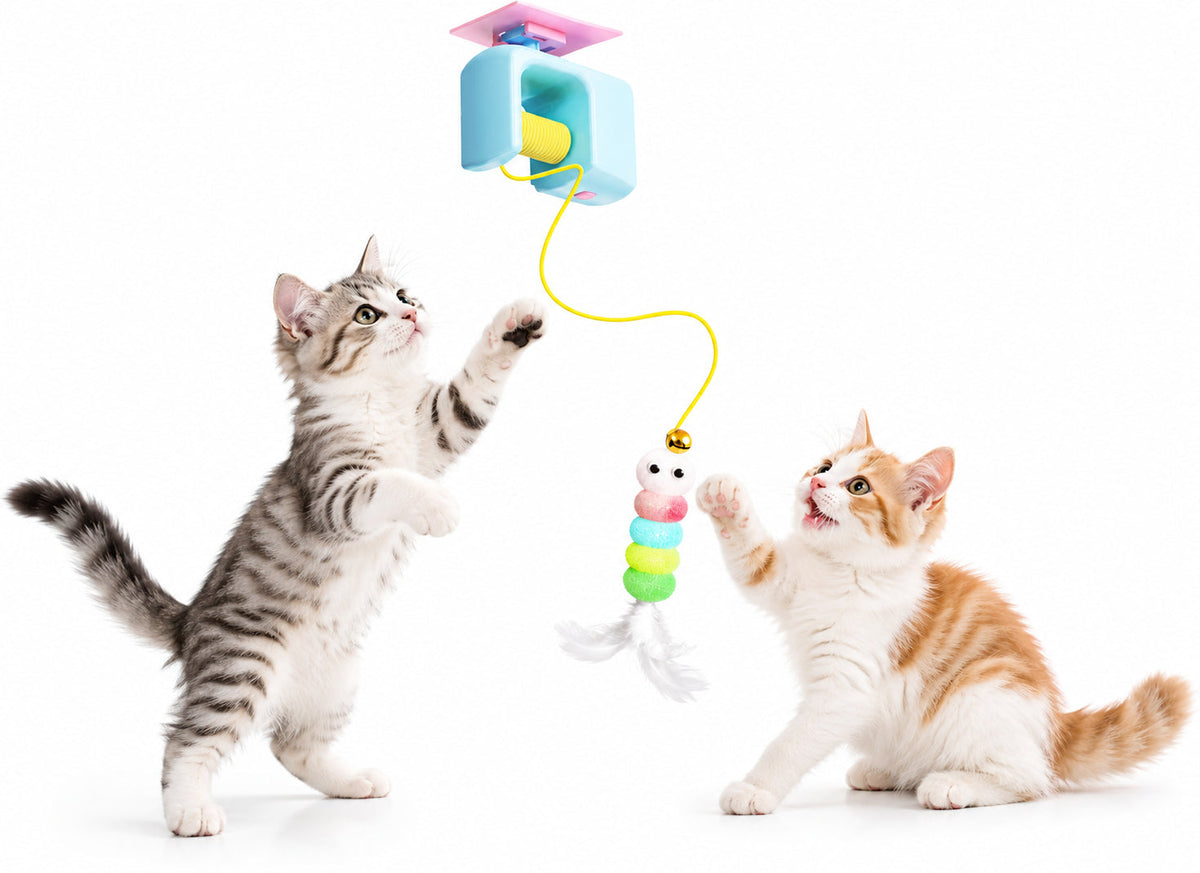
Yes — most indoor cats can learn to play on their own, and a hanging teaser toy is one of the simplest ways to make it happen. Hung at the right height, a dangling teaser gives your cat something to stalk, bat and pounce on whenever the mood strikes, even when you are busy or out of the room. The trick is choosing a toy that moves like prey, hanging it securely, and refreshing it before boredom sets in.
Why indoor cats need solo play
Cats are hunters by nature. In the wild, a cat spends much of its waking time stalking, chasing and pouncing, and that instinct does not disappear just because dinner arrives in a bowl. An indoor cat with nothing to hunt can end up sleeping all day, scratching the furniture, or waking you up at 3 a.m. looking for entertainment.
A toy your cat can use without you gives them an outlet for that hunting energy, and a few minutes of independent play in the morning can leave a cat calmer while you work. Shared play still matters, but solo play fills the hours in between.
What makes a hanging teaser toy work
A hanging toy works because it copies the way prey behaves. A teaser that dangles, sways and bounces at paw height triggers the same stalk-and-pounce sequence a cat uses outdoors. Feathers, fluttering fabric and a small bell add movement and sound that keep a cat's attention longer than a toy lying flat on the floor.
The best hanging toys are light enough to swing freely when batted, but sturdy enough to survive repeated pouncing. A caterpillar-style teaser with feather accents gives a cat several textures to grab, and because it hangs in the air, your cat can play standing and stretching up on their hind legs.
Height matters more than most people realise. Hang the teaser so its lowest point sits just above your cat's head when they stand on all fours. Too low, and the toy drags on the floor and stops being interesting. Too high, and your cat cannot reach it at all.
Setting up a hanging cat toy in five minutes
Pick a spot your cat already likes — near a favourite window, beside the sofa, or in a quiet corner they treat as their own — with enough clear space around it for your cat to circle, crouch and pounce.
Fix the hanger firmly and test it with a firm tug before you let your cat near it. A toy that falls down mid-pounce will frighten a nervous cat and may put them off the toy for days. Once it is secure, let the teaser hang still and let your cat approach it in their own time. Some cats pounce within seconds; shy cats may need a day or two of watching before they try. A slow, gentle sway is a much better invitation than dangling it in their face.
Rotate the teaser heads regularly: when the feathers flatten or the fabric gets tired, a fresh teaser head makes the same toy feel new again — far cheaper than buying a whole new toy.
Keeping solo play safe
Hanging toys are meant to be played with under supervision, especially at first. Before each play session, give the toy a quick check: tug the feathers and the bell gently, look for loose threads, and check the cord and the hanger for wear. If anything is frayed, torn or coming loose, take the toy down and replace the damaged part before your cat plays with it again.
A hanging toy worth trying
For a ready-made option, the OIKEIOS Hanging Interactive Cat Toy with 2 Replacement Teasers ($19.99) is built around exactly this idea: a suspended caterpillar-style teaser with feather accents and a bell, in blue or pink, with one teaser attached and two replacement teaser heads included, so you can refresh the toy when the first one wears out. The supplier describes an automatic up-and-down movement for the teaser, so check the listing for the latest operating details before you buy. At just 100 g per set, it is light enough to hang almost anywhere your cat likes to play.
Frequently asked questions
Will my cat actually play with a hanging toy on their own?
Most cats will, once they get used to it. Start by hanging the toy where your cat already spends time, and give shy cats a day or two to investigate it. A gentle sway is more inviting than vigorous shaking.
How high should I hang the teaser?
Hang it so the lowest point is just above your cat's head when they stand normally. Your cat should be able to reach it with a small stretch or a short jump, but not be able to lie down and chew on it.
How often should I replace the teaser head?
Swap it when the feathers flatten, the fabric frays, or your cat starts ignoring it. With two replacement heads included, one set can stay interesting for months.
Can I leave a hanging cat toy up while I am out?
It is safer not to. Take the toy down or move it out of reach when you leave for a long time, and always inspect cords, feathers and bells before the next play session. Supervised play keeps the fun in and the risk out.